Your coding agents
watch themselves.
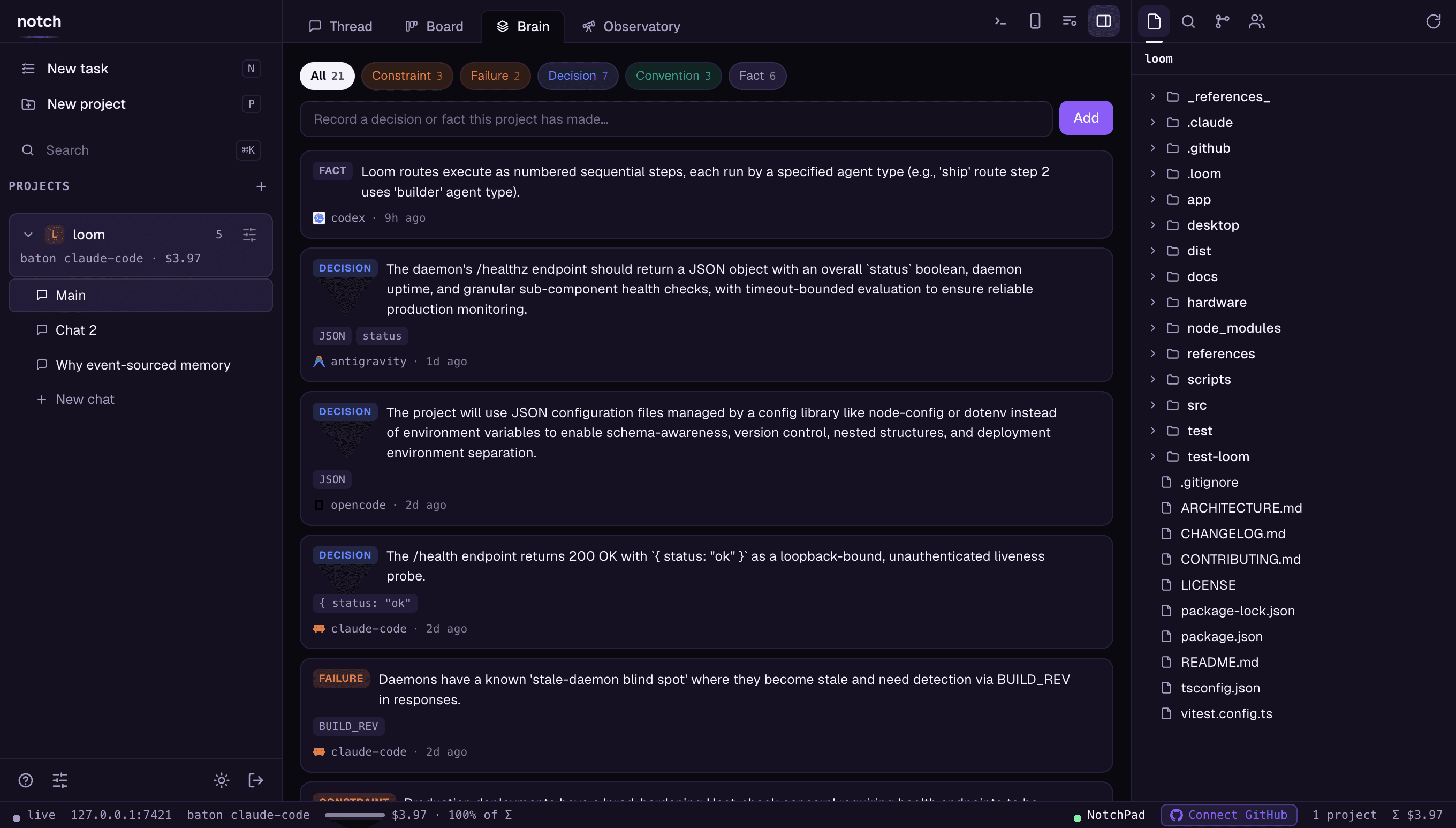
Claude Code, Codex, OpenCode, Grok and Antigravity each keep their own memory and run blind to each other. Notch gives them one shared brain and one baton — and traces every turn, handoff and memory fold to SigNoz as OpenTelemetry gen_ai spans.
macOS · Windows · Linux · Android — v0.2.1, free and open source (MIT)
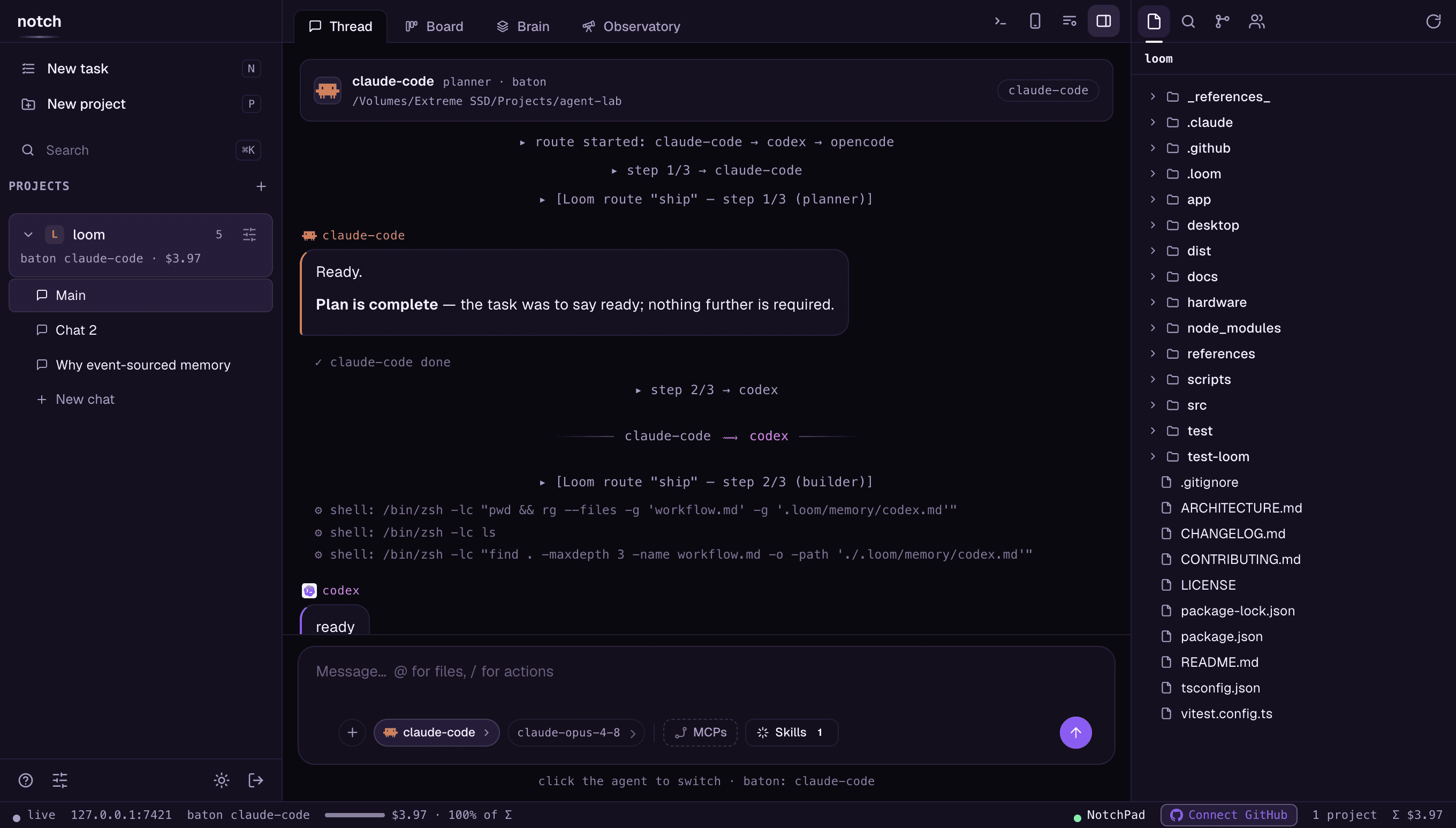
SigNoz is the sink, the source, and the trigger
Most tools ship telemetry and stop there. Notch reads its own spans back out of ClickHouse to score its agents, root-cause its own failures, and act on alerts with no human in the loop.
All three signals
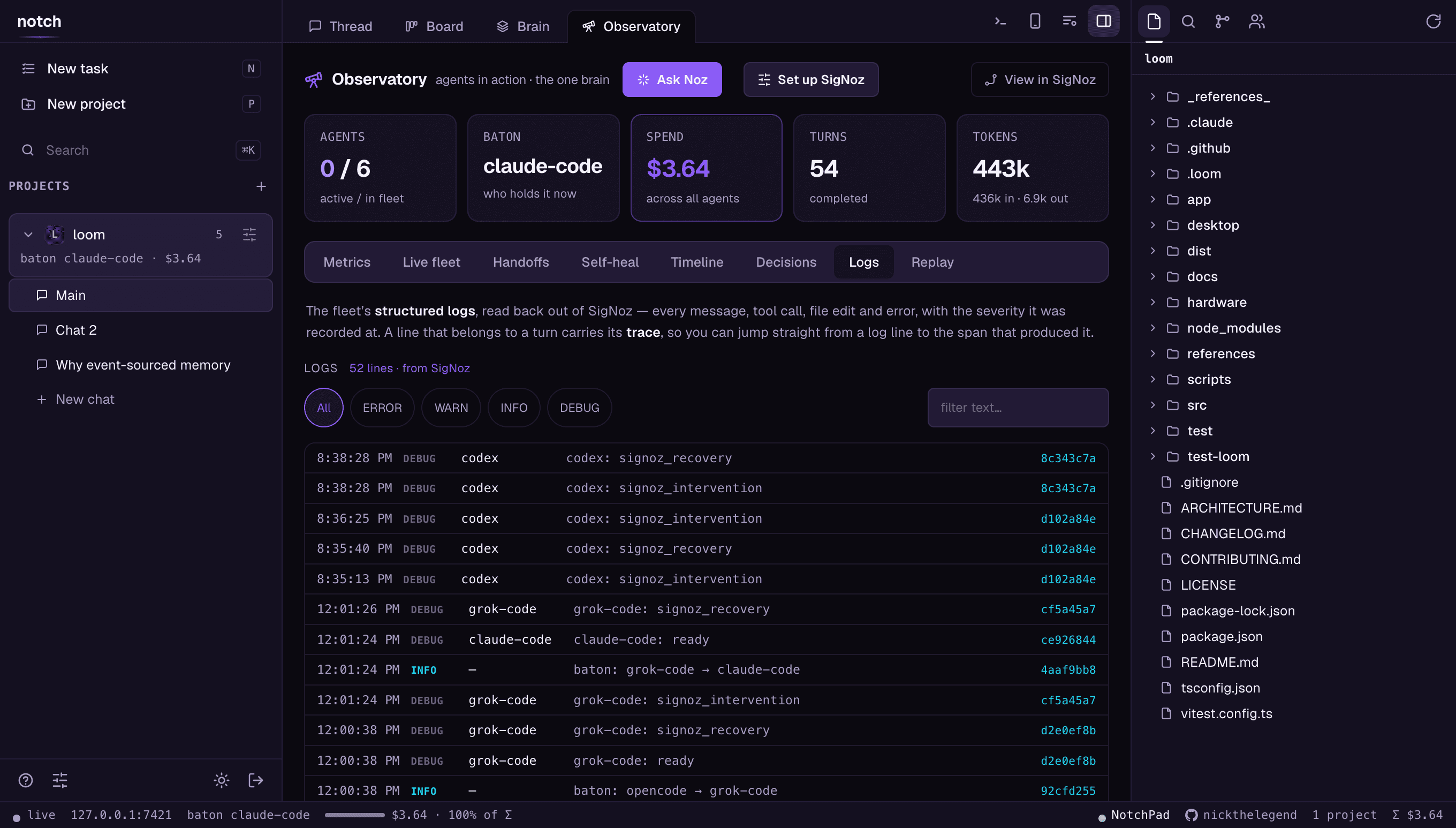
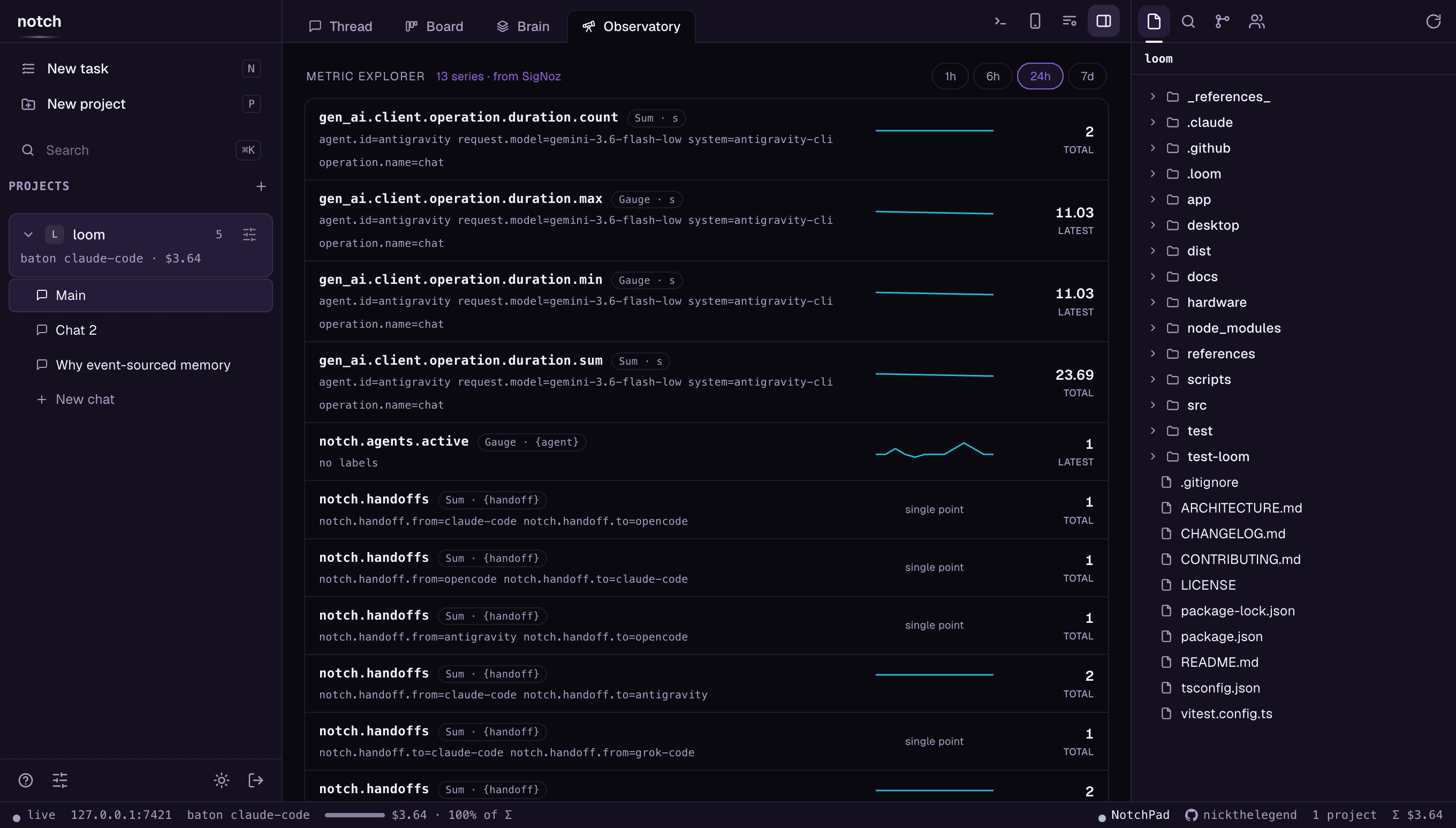
Traces as gen_ai.* spans following the OpenTelemetry GenAI conventions, six metric instruments, and structured logs that each carry the trace id of the turn that produced them.
Queried back out
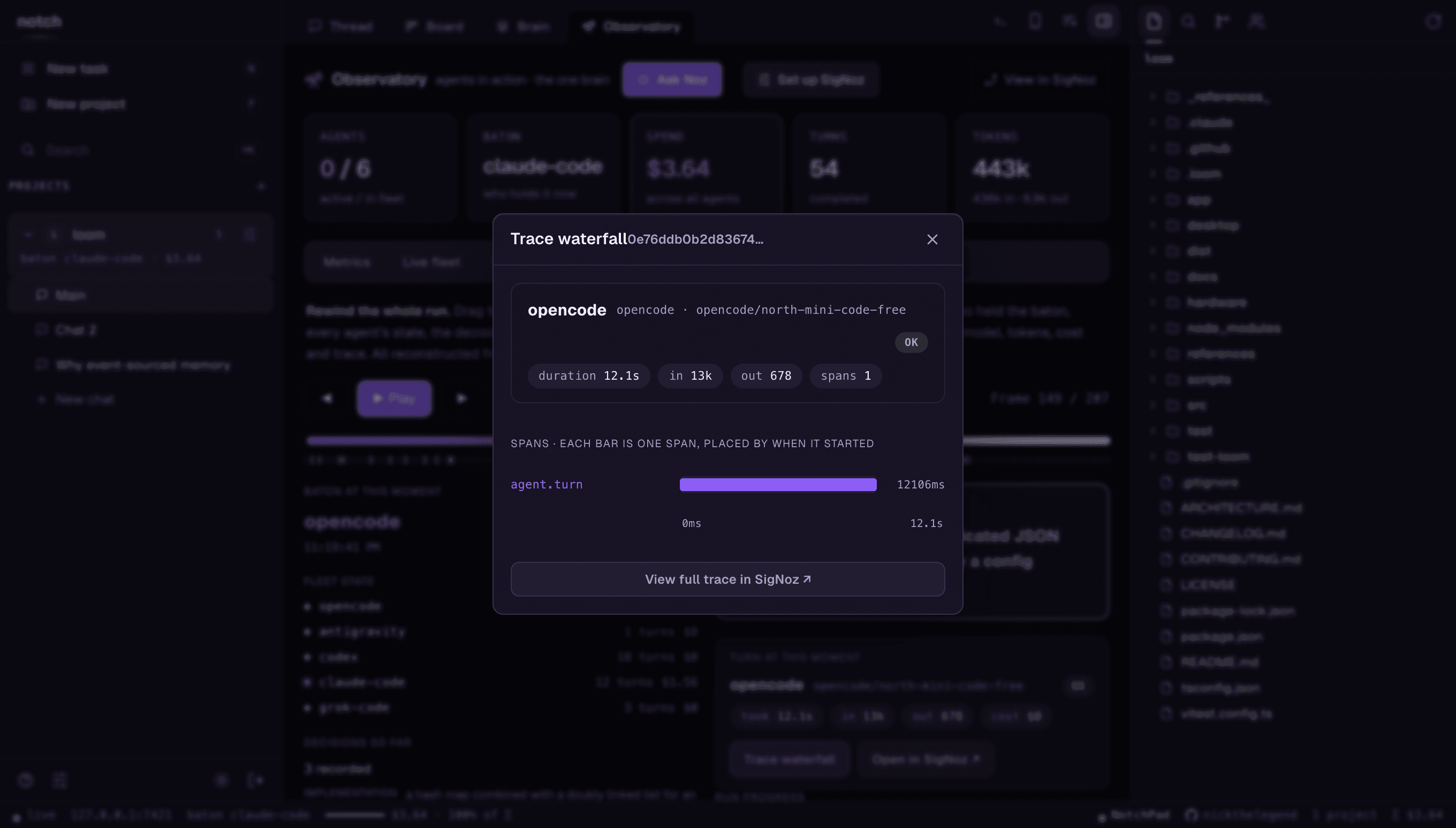
A 0–100 health score per agent, a trace waterfall that deep-links into SigNoz, and Triage — where an agent pulls its own spans and root-causes its own failure.
Self-healing
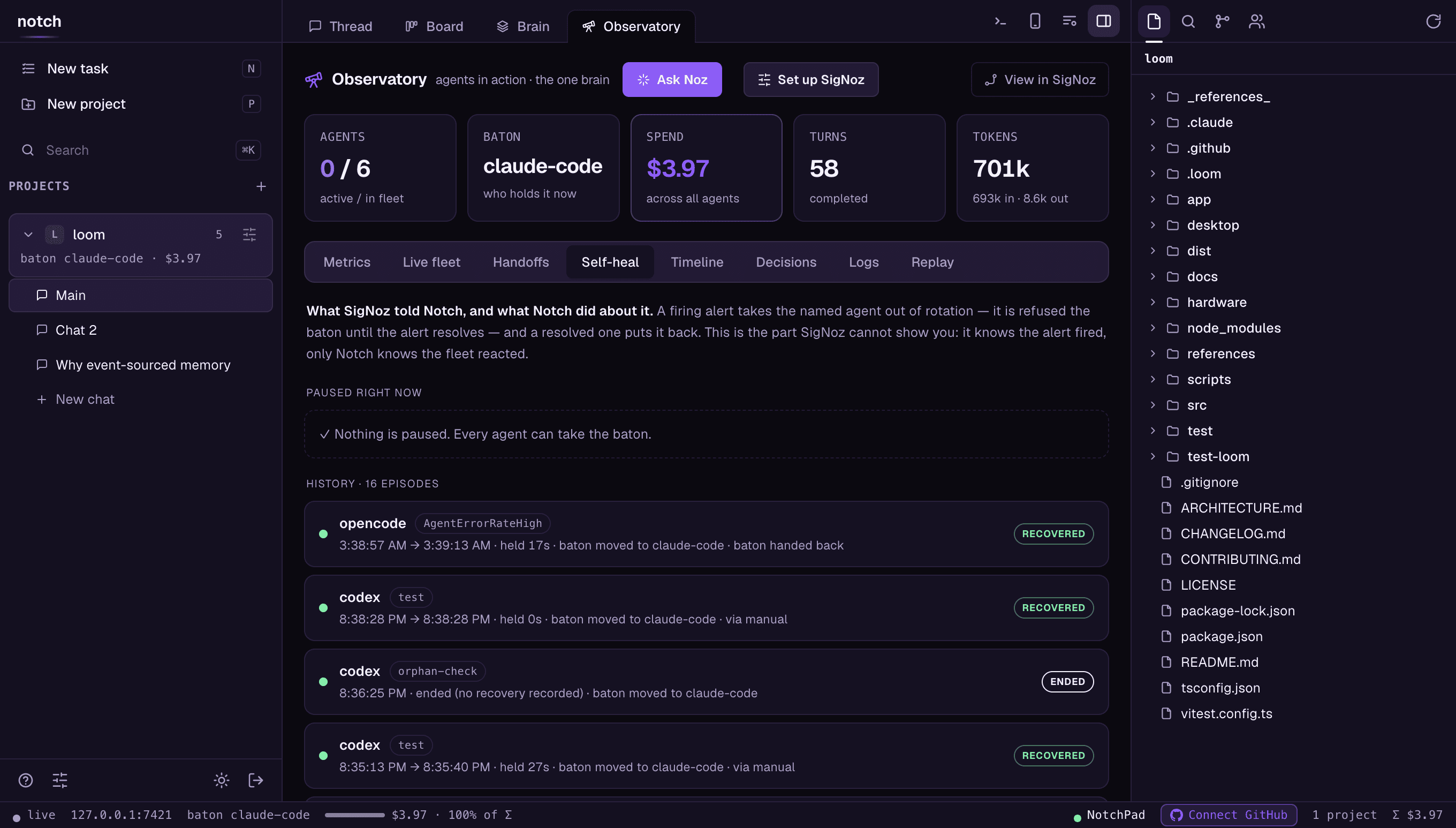
A firing SigNoz alert takes the agent out of rotation and moves the baton mid-turn. When it resolves, the baton comes back. SigNoz knows the alert fired — only Notch knows the fleet reacted.
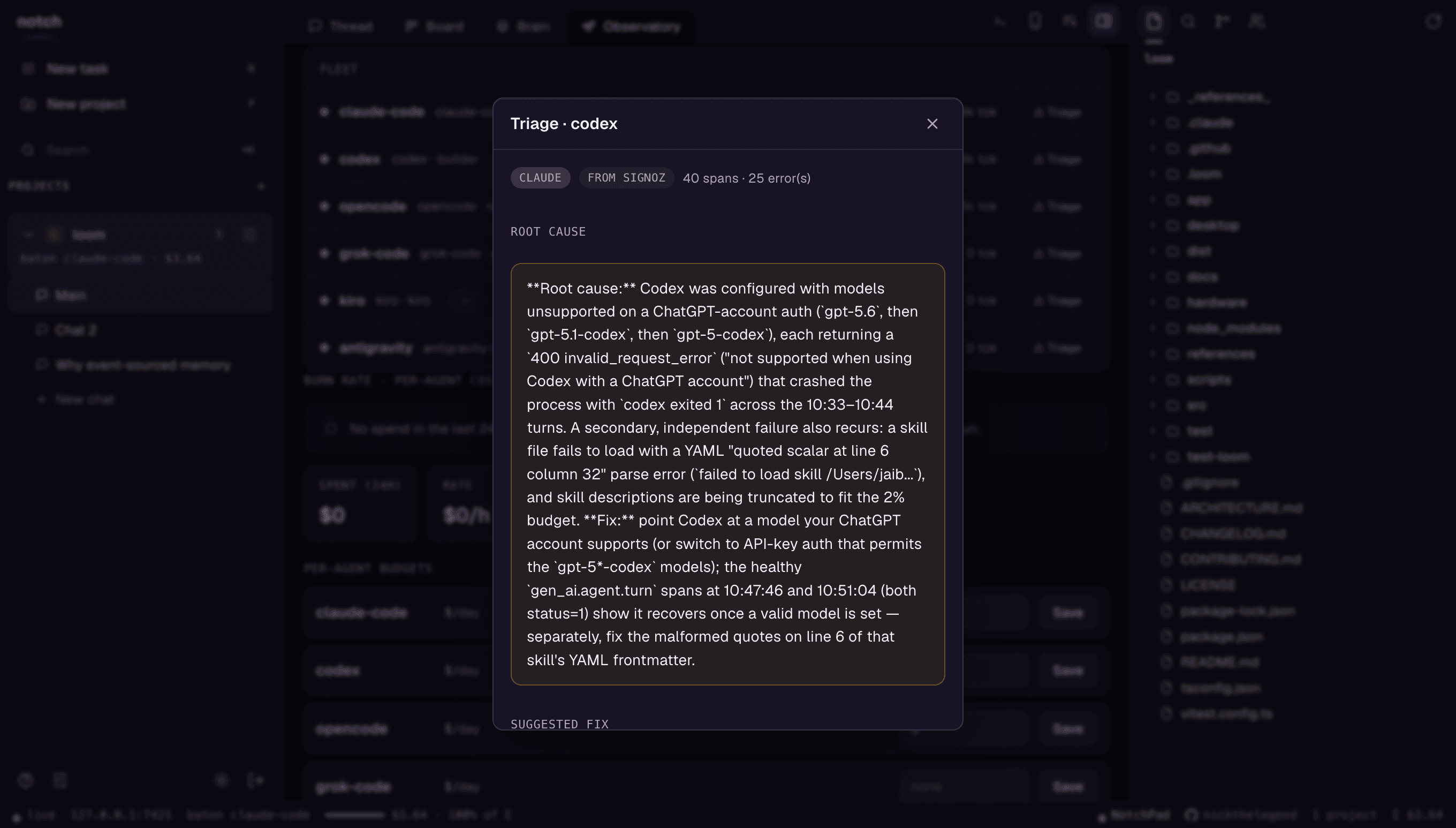
“Why did I fail?” — asked and answered
Codex reading 40 of its own spans back out of SigNoz, finding 25 errors, and explaining exactly which model its auth rejected — and the two healthy turns where it recovered.
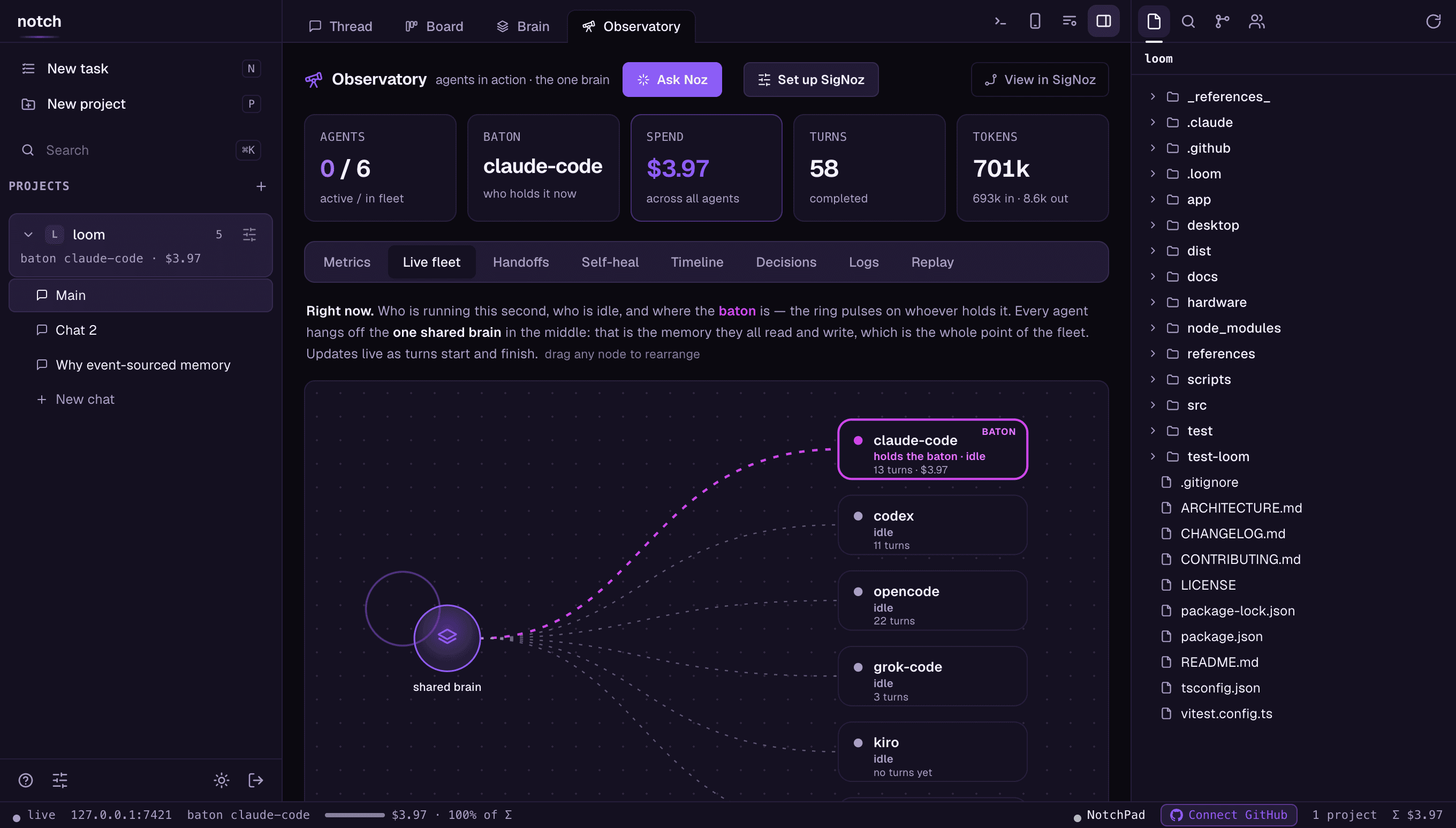
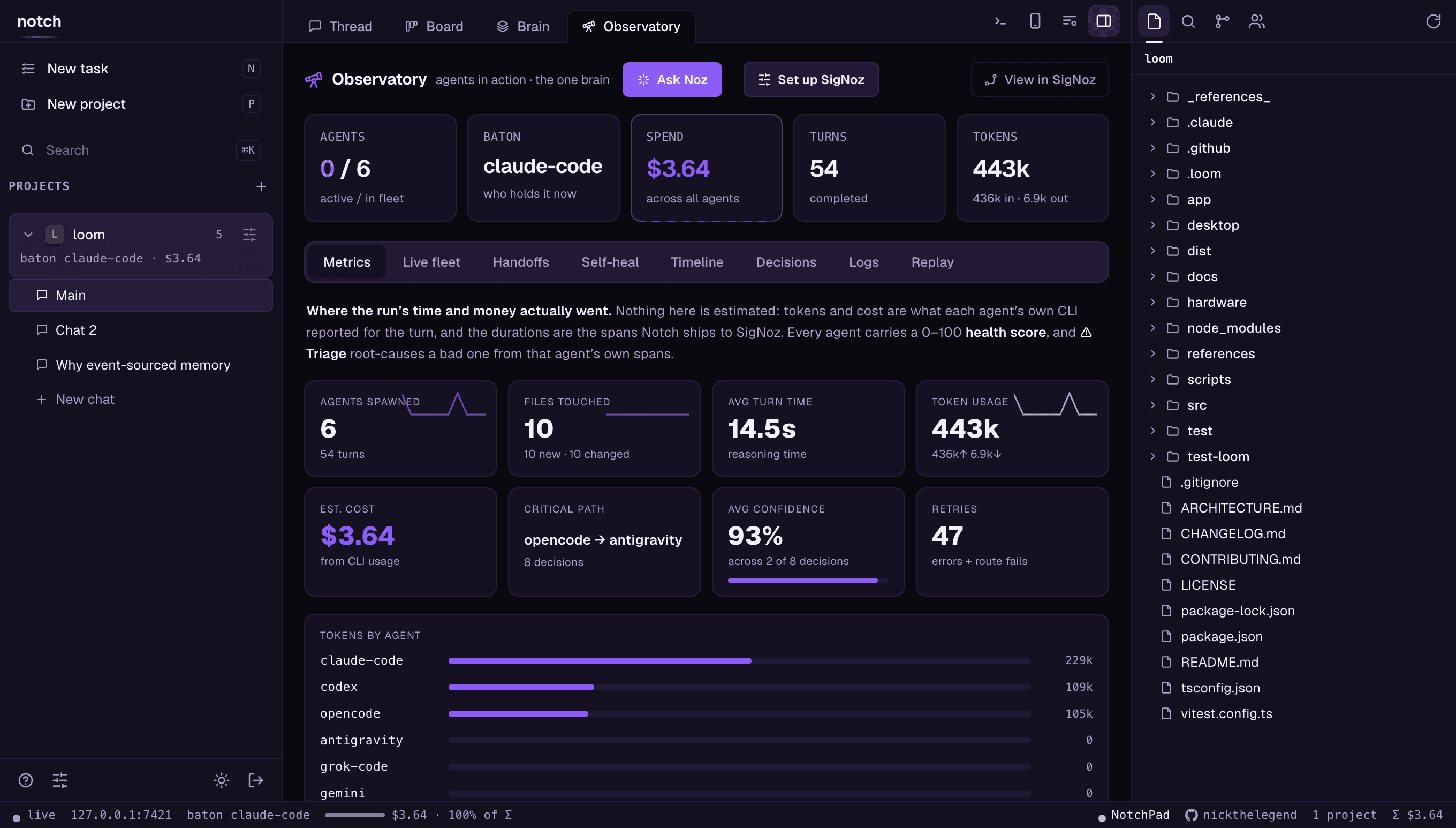
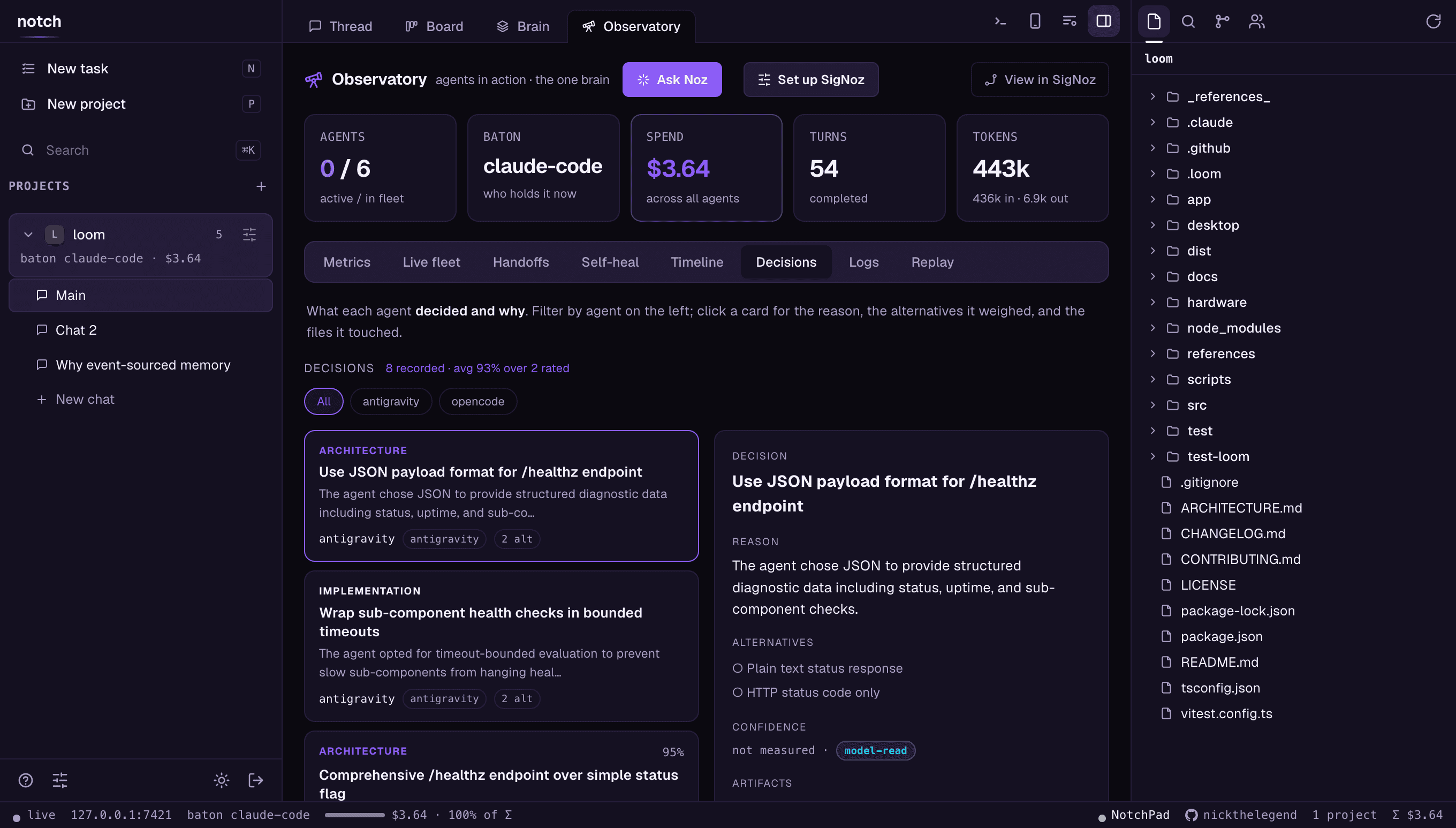
Eight live views over the running fleet
Every screenshot here is a real capture against a live SigNoz. The numbers are measured, not mocked.
Run your fleet where you can see it
Notch is local-first — it drives the CLIs already on your machine and your code never leaves it. Point it at SigNoz and the next turn you run is already traced.